


23 October 2026 08:30 (UTC+04:00)
Ulviyya Poladova
Every extra fraction of a degree in average global temperature
is a direct contributor to the intensifying climate risks that
humanity is now grappling with. The headlines we see all too often
about the apocalyptic intensity of wildfires, sudden, paralyzing
floods, and record-breaking heat are not isolated cases. These are
the symptoms that the planet is going beyond its limits.
The scientific consensus, echoing through countless
international summits, is stark: if we exceed the 1.5°C threshold
of global warming, the consequences become exponentially more
severe. Yet, the current global trajectory is sobering. Based on
present climate policies, we are drifting toward a 2.8°C increase
by the end of this century. Even if every nation managed to fully
implement the climate commitments they have already made, the
expected rise would still hover around 2.6°C. While these figures
are intimidating, the situation is far from hopeless. There is a
perceptible shift in the global energy landscape because the
reliance on fossil fuels is gradually softening, and the footprint
of renewable energy sources is expanding. This transition is
essential to slowing the rate of warming and mitigating the
increasingly destructive weather patterns that have been plaguing
countries around the world.
One of the reasons for climate change is the spread of
greenhouse gases in the atmosphere. These gases trap heat and
prevent some of it from escaping into space, causing the Earth’s
average temperature to rise.
In the middle of this challenging transition sits
In the middle of this challenging transition sits Azerbaijan.
While it is a nation with a deep, long-standing energy heritage, it
is also actively demonstrating a commitment to change. According to
the European Commission’s Emissions Database for Global Atmospheric
Research (EDGAR), the country that hosted COP29 has made
significant progress in reducing greenhouse gas emissions.
Azerbaijan’s total emissions fell from 58.52 million tons in 2024
to 57.72 million tons of CO₂ equivalent in 2025. This may sound
like a modest step, representing a decrease of about 0.8 million
tons, or roughly 1.4%. However, when placed in the context of a
0.7% increase in global emissions over the same period, which
pushed the global total to an staggering 54.15 billion tons,
Azerbaijan’s performance is notable. It serves as tangible evidence
of the country’s commitment to its voluntarily undertaken
environmental obligations, proving that it is possible to buck the
global trend even while transitioning an established industrial
base.
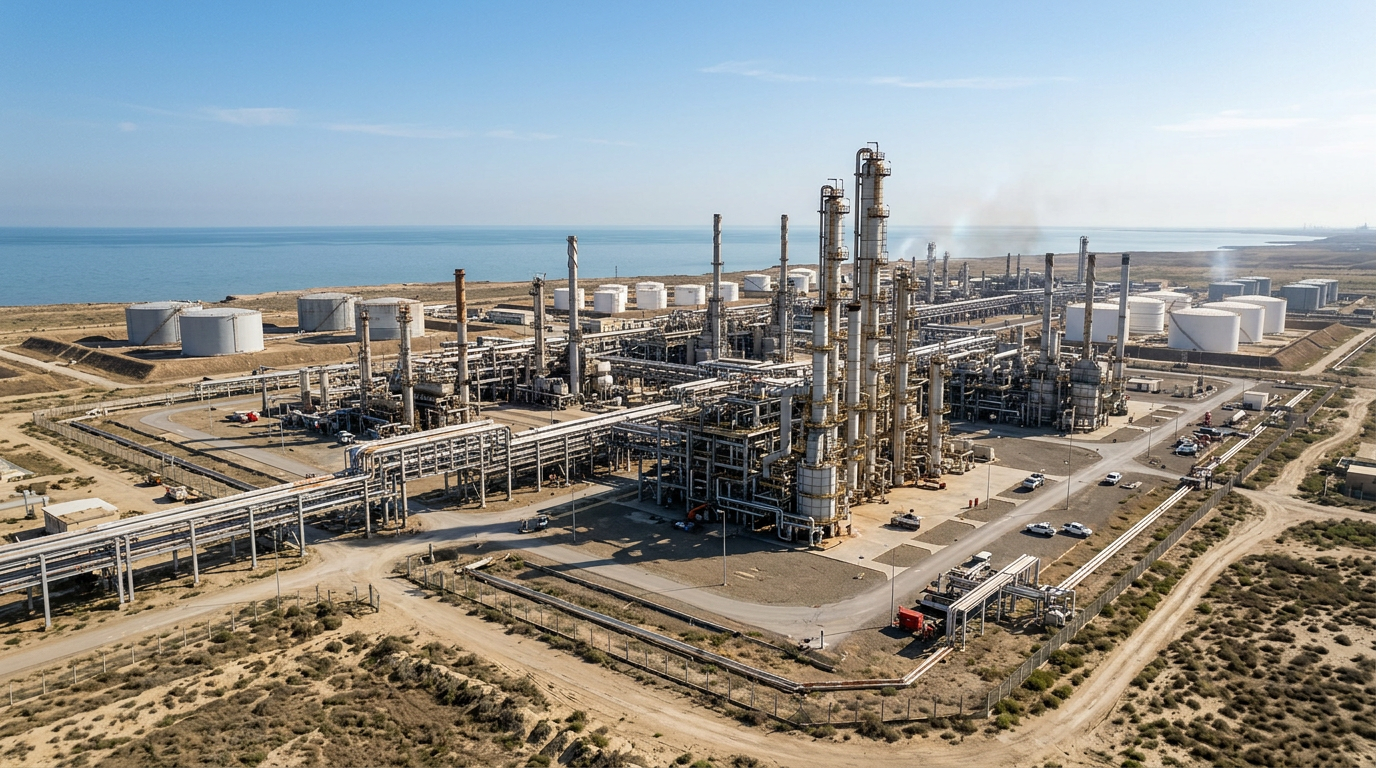
Azerbaijan has one of the world’s longest histories of oil and
gas production. The industry has played a central role in the
country’s economic development, but decades of extraction have also
left behind infrastructure that presents challenges for modern
emissions management. Some onshore facilities and pipelines date
back to the Soviet period. Ageing equipment, worn seals, outdated
compressors and sections of deteriorating pipeline infrastructure
can increase the risk of methane leaks. In some cases, older
operating practices have also contributed to the release of natural
gas into the atmosphere. Methane is particularly important in the
climate debate because it is a powerful greenhouse gas, especially
over shorter periods. Reducing methane emissions can therefore
deliver significant climate benefits without requiring an immediate
end to oil and gas production.
But from the general background of all these obstacles,
Azerbaijan has begun taking measurable, proactive steps toward
methane reduction. In 2024, the State Oil Company of the Republic
of Azerbaijan (SOCAR) launched an ambitious program designed to
drastically reduce methane emissions within the next decade. Rather
than relying on traditional, slow-moving manual inspections, the
company is embracing the future by integrating cutting-edge
technology. The initiative employs a sophisticated mix of satellite
monitoring, drone-based detection, and specialized gas-imaging
cameras. Most importantly, artificial intelligence systems are now
analyzing operational data to pinpoint potential leaks with
unprecedented accuracy.
This approach reflects a broader, necessary evolution
This approach reflects a broader, necessary evolution in the
global energy industry toward data-driven emissions management.
SOCAR’s plan to expand this drone monitoring across 80 facilities
paired with granular, ground-level detection systems, signals that
they are taking the issue seriously.
The impact of these efforts is already showing on the balance
sheet of environmental impact. In 2025 alone, SOCAR succeeded in
cutting approximately 1 million tons of greenhouse gas emissions.
This achievement was driven in large part by applying the Leak
Detection and Repair (LDAR) program at its “Azneft” production
enterprise. Beyond this specific project, the past year also saw
the adoption of a comprehensive “Decarbonization Roadmap.” This
document defines the main areas of action like reducing carbon and
methane emissions, promoting large-scale electrification, exploring
carbon capture technologies, drastically improving energy
efficiency, and expanding the portfolio of renewable energy
sources.
Ultimately, the path toward a cleaner, greener future is a
complex, long-term marathon. President Ilham Aliyev has clearly
stated that the goal of achieving a clean environment and
transforming Azerbaijan into a “green growth” country is now one of
the five key national priorities for the nation’s socio-economic
development through 2030. For a country with such a deep-rooted
history in fossil fuels, this is a profound pivot – one that
acknowledges the realities of the past while aggressively reaching
for a more sustainable future.
Here we are to serve you with news right now. It does not cost much, but worth your attention.
Choose to support open, independent, quality journalism and subscribe on a monthly basis.
You can also follow AzerNEWS on Twitter @AzerNewsAz or Facebook @AzerNewsNewspaper
Thank you!
