


In all his five decades of living in Hokkaido, Makoto Watanabe cannot recall ever being confronted by a cockroach.
But he admits being alarmed by reports that the despised insects are taking advantage of global warming to gain a foothold in a part of Japan where winters were previously considered too hostile for large colonies to emerge.
“When I was a university student in Tokyo 30 years ago, I used to see them in my accommodation and I absolutely hated them,” Watanabe told This Week in Asia.
“Since I moved back here, I have always thought that one of the big advantages of living in a place where it is so cold for much of that year is that there are far fewer insects, but cockroaches in particular,” said Watanabe, an academic who lives in the town of Eniwa.
But Hokkaido has changed in those 30 years. According to Japan Meteorological Agency statistics, the average daytime temperature across the nation’s most northerly main island is 23 degrees Celsius (73.4 degrees Fahrenheit), rising to 29 degrees in major cities such as Sapporo, in the summer. That is 1.5 degrees higher than three decades ago.
More recently, localised summer temperatures have spiked as high as 35 degrees, a figure that was unthinkable even a decade ago.
Winter temperatures have also become milder, with the mean average at minus 3.7 degrees in January 1996, but up to minus 2 degrees in January this year.
“The environment in the north of Japan has changed a lot and while it used to be difficult for cockroaches to thrive there, they are now finding ways into the ‘artificial environments’ that have been created by development,” said Dr Koichi Goka, head of the Invasive Species Research Team at Japan’s National Institute for Environmental Studies.
According to Goka, the “heat island” effect has multiplied in big cities as modern industrial, business and residential units are fitted with heating units, as well as double glazing and other forms of insulation that make them comfortable environments for people and insects.
This means a species previously rare in Hokkaido is now making itself comfortable in its new surroundings.
“Cockroaches arrive in Hokkaido through human activity – attached to vehicles or in cardboard containers for food or consumer products – and they are increasingly finding places where they can survive even over the harsh winter months,” Goka said.
Cockroaches are typically found in tropical or subtropical regions, but three varieties have apparently evolved to the point that they are able to withstand Hokkaido winters.
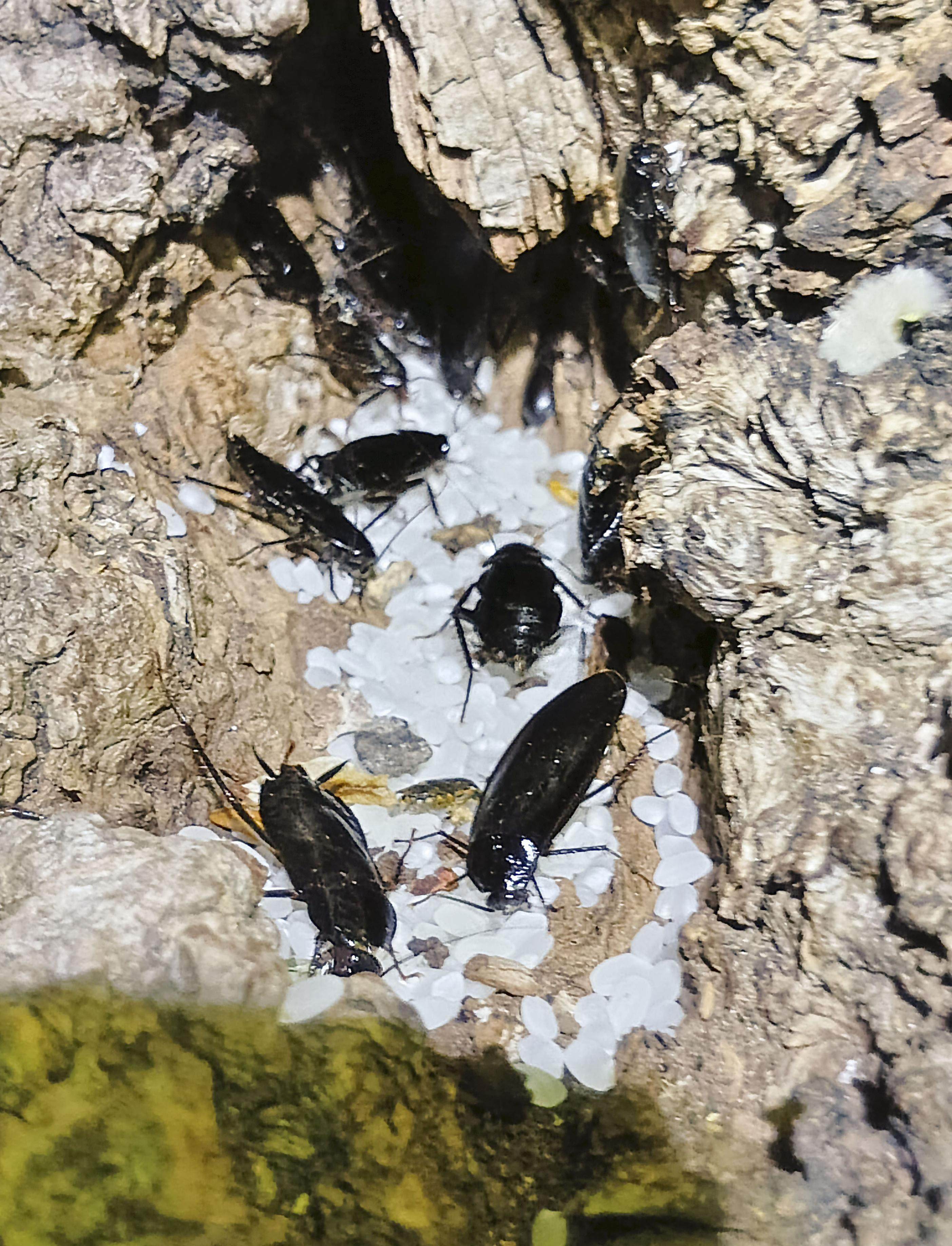
The black cockroach grows to about 3cm long and has shiny black wings. The “brown-banded” variety is smaller and red-brown in colour. Increasingly common is the Japanese cockroach, which lives outdoors in more southern latitudes but has adapted.
And Goka believes it is likely that a tipping point has been reached, with the insects having hit a critical mass and Hokkaido’s temperatures set to continue rising.
“They are established in Hokkaido now and it will be very difficult – if not impossible – to eradicate them now,” he said. “They have found their ways into buildings and homes, so they have a foothold.”
The owner of a Hokkaido-based pest extermination company told the Fuji News Network broadcaster that requests to deal with cockroach infestations were very rare a decade ago, but he had received 50 such requests since the start of this year.
By the end of the year, he said, he expected the number of call-outs to have doubled.
