


MAG
Macau Business
Business Intelligence

InternationalMacauMacau BusinessMAGMBOpinion
20 Sept 2026
OPINION – Global warming, global warning and international politics
ByJosé Luís de Sales Marques
Heat waves and wildfires across the Western Hemisphere

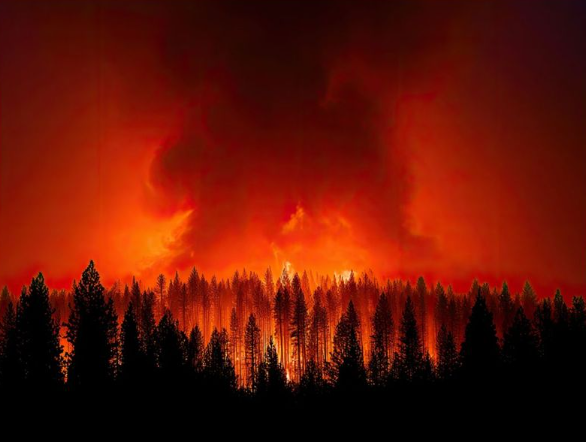
Global warming coupled with a super “El Niño” has turned Europe’s Mediterranean tourist destinations into sizzling hotplates, with temperatures reaching daily averages in the high thirties or even forties this summer, alongside devastating wildfires all over the northern shores of the sea ancient Rome once called Mare Nostrum—our sea. These heat waves also extended to old Britannia, with Londoners suffering spikes of 38–40°C and mean temperatures sitting 3°C above seasonal averages. In this context of accelerated climate change and widespread wildfires recurring year after year, as well as worsening desertification in some of those countries, a new item is reaching Europe’s political agenda this September as politicians return from their summer retreats: as Politico highlighted on 24 August 2026, what happens if tourists give up on Europe’s sweltering south?
Some European lawmakers are calling for industrial diversification, which, as we know extremely well, is not easily achieved. Having stayed a whole month in Portugal, we found no signs of a crisis in tourist appeal towards the country. Restaurants in tourist areas are full all the time, big crowds are still wandering around city centres and beyond, long queues form at the door of Harry Potter‘s Livraria Lello & Irmão in Porto, and flights are fully booked with price hikes everywhere. However, notwithstanding the industry’s resilience, figures show the sector’s growth slowing down, due mostly to heightened travel costs, inflation, and ultimately overcrowding and some fatigue, as travel infrastructure such as Lisbon Airport and train services are not up to the quality standards everyone should expect from such a popular destination.
The immediate causes for inflation and air travel inconveniences beyond cost—such as prolonged travel times for intercontinental flights—lie in the armed conflicts in Ukraine and Iran, which neither party is yet ready to terminate, heightening the probability of wider escalations through tragic miscalculations. While Ukraine celebrates 35 years of independence from the Russian Federation, Russia’s invasion and the subsequent war have already lasted five years, with neither side winning nor capable of recognising that reality. In that context, Europe’s northern and eastern flanks are becoming increasingly exposed to all kinds of threats, and the European economy is enduring tremendous stress derived from its direct (through NATO) and indirect involvement in that fratricide conflict.
Global warming is also warning climate change deniers in the US—led by the current White House tenant—to take a reality check on all the devastation caused by wildfires under extreme heat conditions. July 2026 was officially the hottest month on record for the contiguous United States since record-keeping began in 1895. At the time of writing, wildfires have burned more than 7.8 million acres across the United States in 2026, a 169 per cent increase over the 10-year average of acres burned.
Shifting economic tides and political friction in the Americas
In the meantime, summer has also brought new economic and trade disturbances to the US through the breakdown of the US-Canada trade deal. Once great friends and neighbours sharing the world’s longest border—8,892 kilometres—and US$872 billion in bilateral trade in goods and services, such strong interdependence led great American theorists of international relations Robert O. Keohane and Joseph S. Nye to write in their opus magnum, Power and Interdependence, back in the 1980s:
Ever since World War II the Canadian-American relationship had been governed by a regime based on alliance, constant consultation, and prohibition of overt linkage of issues.
Mostly characterised by predictability and quiet diplomacy, US-Canada relations most closely approached the ideal-type of “complex interdependence”—the liberal institutionalist approach that first attracted us to the discipline of international relations.
Hence, latest developments represent a drastic departure from the past. Relations are now unpredictable, noisy, and, at Trump’s initiative, full of overt linkage of issues—not least the linkage between a trade deal and a last-minute American demand to limit which countries Canada could sign trade deals with (BBC, 25 August 2026). This demand was flatly refused by Mark Carney in his full and responsible exercise as prime minister of a sovereign country.
As a result, 50 per cent tariffs were slapped onto some US$20 billion worth of US imports from Canada, the country most exposed to US trade policies. According to the US narrative, these tariffs are countermeasures against unfair trade practices by Canadians—an argument extended by this administration to almost the entirety of US trading partners. In response, Canada announced a dollar-for-dollar retaliatory package on 20 billion of US imports, including 50 per cent tariffs on steel and aluminium products (doubling the existing 25 per cent), the same measure applied to goods such as honey, furniture, and apparel, 25 percent tariffs on appliances, dairy products (such as cheese), fish, seafood, and certain steel and aluminium derivatives, and a 15 per cent tariff on certain tools and machinery, including forklifts and air conditioning equipment, all taking effect on 8 September. Meanwhile, C$7.5 billion in support measures for industries and workers hit by US tariffs is being implemented.
Further tariffs are also on the horizon, as Trump threatens to increase tariffs on Canadian cars, trucks, and auto parts from 25 per cent to 50 per cent—a move that will heavily burden the country’s automotive industry.
While both sides have much to lose from a trade war, political stress currently weighs more heavily on Trump, as the negative economic impact will hit states such as Michigan, Maine, Ohio, and Alaska, which are economically interdependent with Canada, potentially haunting Republican electoral aspirations in the upcoming November midterm elections. While the Trump administration may find ways to soften the blow for industry, it is unlikely to replicate the compensatory policies for workers that its Canadian neighbours are implementing; such measures fit neither their mindset nor US fiscal flexibility. Instead, we can expect more propaganda and shaming of others for the woes of the American economy to justify why “Make America Great Again” is failing to deliver better lives for most Americans, including supporters.
Navigating global tensions and upcoming diplomatic summits
In reality, the US economy shows mixed signals of resilience and trouble ahead. On one hand, GDP continues to grow at an annualised rate of 1.5 to 2 per cent, driven largely by robust investment in tech and artificial intelligence while other sectors slow down. On the other hand, consumer confidence is dropping, gasoline prices remain high above $4 per gallon as a result of the Middle East conflict (pushing inflation to 3.2 per cent), and hiring in the labour market is slowing while unemployment holds at 4.3 per cent. Under this inflationary framework, the Federal Reserve will necessarily keep interest rates at their current level of 3.5 to 3.75 per cent (per OECD) until the end of the year. In a nutshell, unless negative factors—particularly the price of gasoline—are reversed, voters in November will likely react by punishing the party in power.
On another front, Trump’s foreign policy agenda has failed to deliver its isolationist electoral promises. Ukraine and Russia remain at war, with the US participating through NATO in a “coalition of the willing”, and the war on Iran—a conflict of his own initiation and responsibility—has triggered major negative strategic consequences, damaging US military presence in the Middle East, eroding trust among regional allies, and directly driving up oil and derivative prices in America and globally. Meanwhile, Israel continues bombing Gaza and targeting Lebanon, while military strikes such as the one in Caracas have fallen into a vacuum of international legality, establishing a new order with old faces under strict US control in Venezuela. Every initiated trade war has burdened American pockets, and imperial posturing and threats worldwide—including towards close allies, such as the threat to take over Greenland from Denmark—are eroding trust among long-term friends and partners. The forceful new economic package targeting Tehran, dubbed “Operation Economic Outcast”, relies on unilateral secondary sanctions against Iran’s trading partners and has already been denounced by China as illegal. It also serves as an admission that Iranian resilience has prevailed over US and Israel military attacks.
It is within this context that the Trump administration appears to be seeking at least one positive outcome from a bundle of messy international relations ahead of the elections. Which issue will it attempt to unravel at the eleventh hour? At present, too many hurdles stand in the way of a definitive solution in such a short timeframe. Yet, we may witness some form of political settlement that Trump can present to his MAGA electoral base as a success, aligning with his narrative as the greatest American president making America great again. One can never underestimate the strength of political narratives in our time.
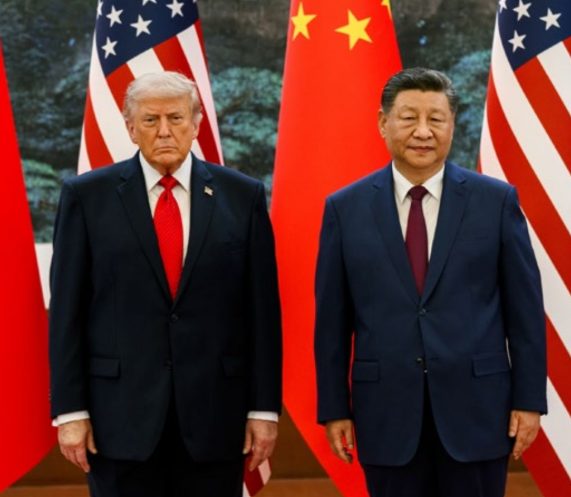
Under these circumstances, Chinese President Xi Jinping’s announced visit to the United States on 24 September is attracting tremendous expectations. The meeting between top leaders of the world’s two most powerful countries will inevitably address global issues and major current conflicts. What should be expected from that visit regarding the state of US-China bilateral relations? What about Iran? Will the visit signal new hope for a peaceful, comprehensive solution in the Middle East and Ukraine? Will China and the US make progress in managing their complex relationship, opening the door for further cooperation and reducing regional and global tensions? Let us hope for positive outcomes.
Chile’s Bachelet quits race to be next UN chief
China advances lunar spacesuit, bed rest research for 2030 moon landing mission
Trump cuts short weekend, returns to White House
Closing loopholes
When Robots Join the Team: Exploring the Future of Human–Robot Collaboration in Hospitality
Behind Macau’s tourism numbers: Why employee wellbeing matters
From D-Day to present, HMS Belfast reflects changing political landscape
Cuba hit with seventh major blackout of the year
Trump says CNN, Politico, MS NOW banned from White House
US lifts sanctions on Eritrea, with eye on Red Sea
Trump says Denmark to give US ‘permanent control’ over Greenland security
Asian Games should feed into Olympics, says IOC chief Coventry

Keep Looking Up
Night Sky Spectacle: Macao International Fireworks Display Contest Returns for a Stellar 34th Edition
All About Mak Mak

Going global: Macao and the future of travel at MITE

Michelle Bachelet, the former president of Chile, withdrew her candidacy for the position of United Nations secretary-general on Saturday, weeks after a straw poll showed her in second to last place among eight candidates.
US President Donald Trump cut short a weekend at Camp David to return unexpectedly to the White House on Saturday, as tensions rose in the Middle East.
Closing loopholes
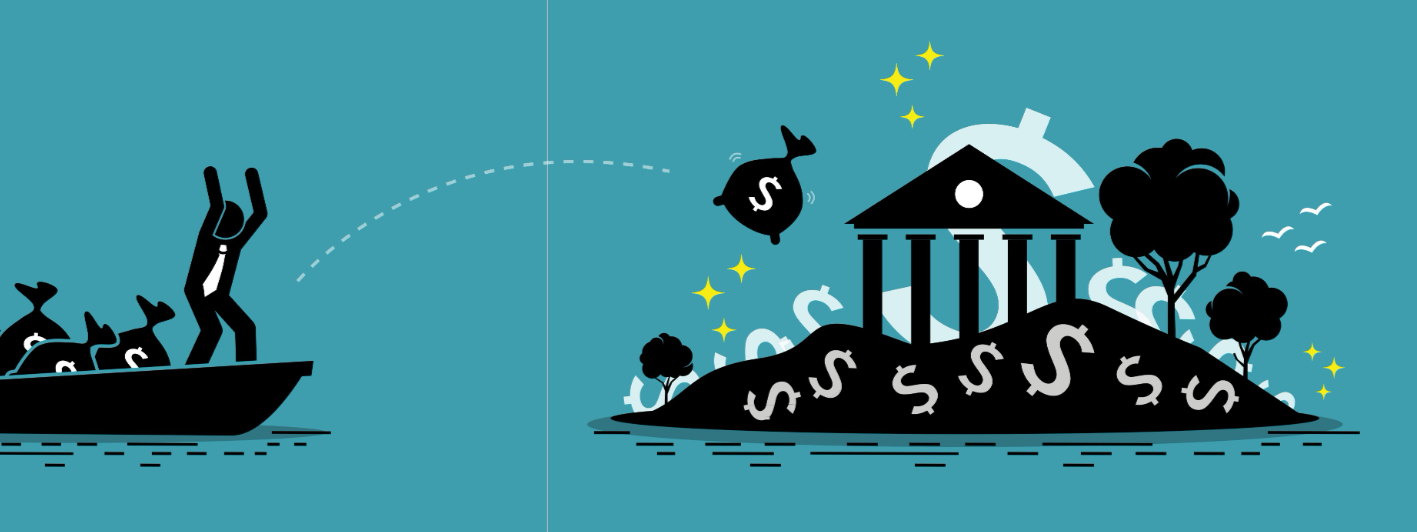
China has launched a landmark tax crackdown on offshore trusts that imposes a flat 20 per cent individual income tax across their entire lifecycle, closing long-standing wealth-preservation loopholes. Experts caution that this move may hinder Macau’s ambitions of building a regional private banking hub.

Study reveals that service robots’ ethnic appearance and accent influence employees’ perceptions and attitudes towards working with robots in hospitality workplaces
